
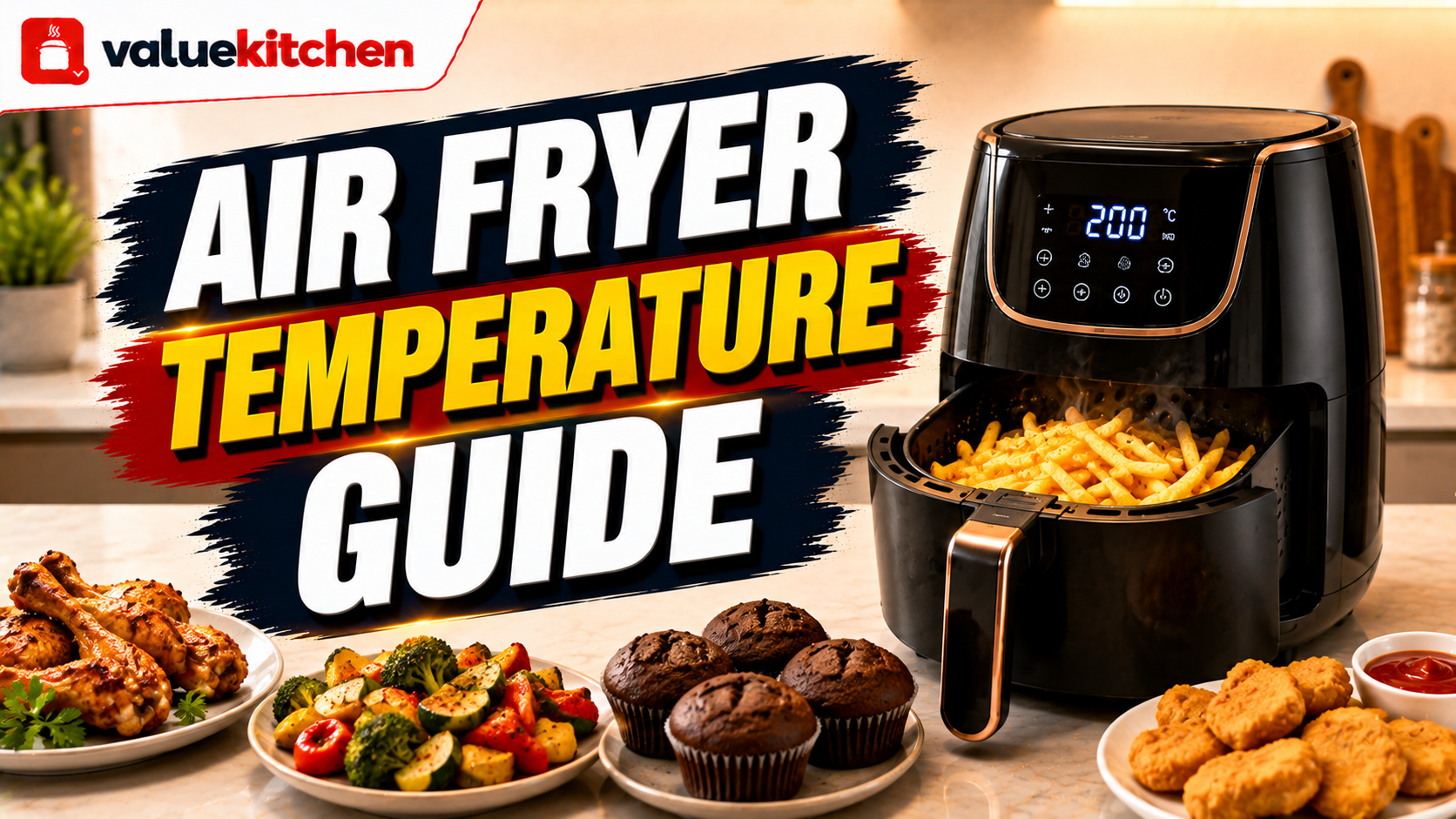
Air Fryer Temperature Guide: What Temp for Every Food (Indian Kitchen)
One of the most common air fryer questions is: what temperature do I set it to? The answer changes with every food, and using the wrong temperature gives you either undercooked results or a burnt exterior with a raw inside.
This guide gives you a complete temperature and time reference for the foods most commonly cooked in Indian kitchens, from samosas and pakoras to chicken, fish, and vegetables.
Indian Snacks and Street Food
| Food Item | Temperature | Time | Notes |
|---|---|---|---|
| Samosas (frozen, store-bought) | 180°C | 12 to 15 min | Flip halfway. Lightly brush with oil for golden crust. |
| Samosas (homemade, raw) | 180°C | 18 to 22 min | Brush generously with oil. Flip at 10 minutes. |
| Pakoras (besan-coated) | 180°C | 10 to 14 min | Spray oil on both sides. Do not overcrowd the basket. |
| Spring rolls / Veg rolls | 190°C | 10 to 13 min | Brush with oil. Turn once at the halfway mark. |
| Aloo tikki (potato patty) | 190°C | 14 to 18 min | Brush with oil, flip at 8 minutes. Press lightly before placing. |
| Bread rolls | 180°C | 10 to 12 min | Brush or spray with oil for a crisp exterior. |
| Mathri / Namkeen biscuits | 160°C | 12 to 15 min | Check at 10 minutes. Low temp ensures even cooking without burning. |
| Puri (small, for reheating) | 160°C | 3 to 5 min | For reheating only. Fresh puris are better deep-fried. |
Frozen and Ready-to-Cook Foods
| Food Item | Temperature | Time | Notes |
|---|---|---|---|
| Frozen french fries | 200°C | 12 to 16 min | Shake basket halfway. No extra oil needed for most frozen fries. |
| Fresh-cut potato fries | 200°C | 18 to 22 min | Pat completely dry before oiling. Toss with 1 tsp oil. Shake at 10 min. |
| Frozen nuggets (veg or chicken) | 190°C | 10 to 14 min | No need to thaw. Shake basket at the halfway mark. |
| Frozen pizza (small, 7 inch) | 180°C | 8 to 12 min | Place directly in basket on parchment if needed. Check at 8 min. |
| Frozen fish fingers | 190°C | 10 to 12 min | Flip at 6 minutes for even browning. |
| Soya chunks (marinated) | 180°C | 12 to 15 min | Squeeze out all moisture before marinating. Toss with oil. |
Chicken and Non-Veg
| Food Item | Temperature | Time | Notes |
|---|---|---|---|
| Chicken wings | 200°C | 22 to 28 min | Flip at 12 minutes. Pat dry before marinating for crispy skin. |
| Chicken breast (boneless) | 190°C | 18 to 22 min | Flip at 10 minutes. Rest for 5 min after cooking before cutting. |
| Chicken tikka (marinated pieces) | 200°C | 18 to 22 min | Shake or flip at 10 minutes. Leave space between pieces. |
| Fish fillet (fresh) | 180°C | 10 to 14 min | Brush with oil. Handle carefully when flipping as fish breaks easily. |
| Fish fry (batter-coated) | 190°C | 12 to 15 min | Spray oil on battered coating. Flip carefully at 7 min. |
| Prawns / Shrimp | 180°C | 8 to 10 min | Prawns cook fast. Watch closely after 6 minutes. Overcooking makes them rubbery. |
| Seekh kebab | 190°C | 14 to 18 min | Turn at 8 minutes. Brush with oil or butter once during cooking. |
Paneer and Vegetables
| Food Item | Temperature | Time | Notes |
|---|---|---|---|
| Paneer tikka | 190°C | 12 to 15 min | Marinate for at least 30 minutes. Flip once at 7 minutes. Brush with butter at end. |
| Cauliflower florets (roasted) | 180°C | 14 to 18 min | Toss with 1 tsp oil and spices. Shake basket halfway. |
| Baby potatoes (whole, halved) | 190°C | 18 to 22 min | Toss with oil and spices. Shake at 10 minutes. Fork-test for doneness. |
| Brinjal / Eggplant slices | 180°C | 12 to 15 min | Brush both sides with oil. Flip at 8 minutes. |
| Corn on the cob | 190°C | 14 to 16 min | Brush with butter and spices. Turn once during cooking. |
| Capsicum slices | 170°C | 8 to 10 min | Thin slices cook fast. Toss lightly with oil and salt. |
| Mushrooms (whole) | 180°C | 8 to 10 min | Toss with oil, garlic, and herbs. Mushrooms release moisture so do not overcrowd. |
Baked Goods and Bread
| Food Item | Temperature | Time | Notes |
|---|---|---|---|
| Garlic bread | 160°C | 5 to 7 min | Watch closely. It goes from golden to burnt quickly at this size. |
| Cookies / Biscuits | 160°C | 8 to 12 min | Use parchment paper. Bake in small batches. Cookies firm up as they cool. |
| Muffins (small, cupcake size) | 160°C | 14 to 18 min | Toothpick test at 14 minutes. Cover loosely with foil if top browns too fast. |
| Cake (small tin, 6 inch) | 160°C | 25 to 35 min | Use a small tin that fits inside your air fryer basket. Toothpick test for doneness. |
| Toast / Bread slices | 180°C | 4 to 6 min | No oil needed. Check at 4 minutes as thickness varies by bread type. |
Reheating Leftovers
Reheating in an air fryer is one of its most underrated uses. It restores crispiness that a microwave never can.
| Food Item | Temperature | Time |
|---|---|---|
| Pizza slices | 160°C | 3 to 5 min |
| Samosas, pakoras, rolls (already cooked) | 160°C | 4 to 6 min |
| French fries (leftover) | 180°C | 3 to 5 min |
| Chicken pieces (already cooked) | 170°C | 5 to 8 min |
| Idli (reheating, not frying) | 160°C | 6 to 8 min |
Tips for Better Results Every Time
Looking for an air fryer? Read our best air fryers under Rs. 5,000 guide or the Philips NA120 vs AGARO Galaxy comparison to find the right model for your kitchen budget.
Frequently Asked Questions
What is the best temperature for air fryer cooking in general?
Most air fryer cooking happens between 160°C and 200°C. Low temperatures (150 to 165°C) are for baked goods and delicate items. Medium temperatures (170 to 185°C) work for Indian snacks, paneer, and fish. High temperatures (190 to 200°C) are for fries, chicken, and anything you want very crispy. When in doubt, start at 180°C and adjust from there.
Why is my air fryer food not getting crispy?
Three common reasons: the basket is overcrowded (pieces steam each other), the food was not patted dry before oiling (surface moisture prevents crisping), or the temperature is too low. Try cooking in smaller batches, always pat food dry, and increase the temperature by 10 degrees if results are consistently soft.
Do I need to preheat my air fryer?
Preheating for 3 to 4 minutes improves results for most foods, especially frozen items and snacks. It ensures the cooking environment is already at the right temperature the moment food goes in, giving immediate crisping on the surface. For baked goods and delicate items, preheating is less critical.
Can I use aluminum foil in an air fryer?
Yes, but with caution. Use foil only on the bottom of the basket or tray, not across the entire surface. Foil that blocks all the air holes reduces airflow and defeats the purpose of the air fryer. Never place foil in the air fryer without food on top — the air circulation can cause it to blow against the heating element and create a safety hazard.
How much oil should I use in an air fryer?
Much less than traditional frying. For most snacks and vegetables, 1 teaspoon of oil tossed through the food is enough for a batch of 200 to 300 grams. Brush or spray oil onto the surface rather than soaking the food. For already fatty foods like certain meats and paneer, you may need no added oil at all. The goal is a thin, even coating rather than soaking.
All temperatures and times in this guide are approximate and intended as starting references for standard basket-style air fryers (1200W to 2000W). Results vary by model, food size, and moisture content. Always verify doneness before serving. ValueKitchen is an independent kitchen resource for Indian households.




One Comment
Comments are closed.