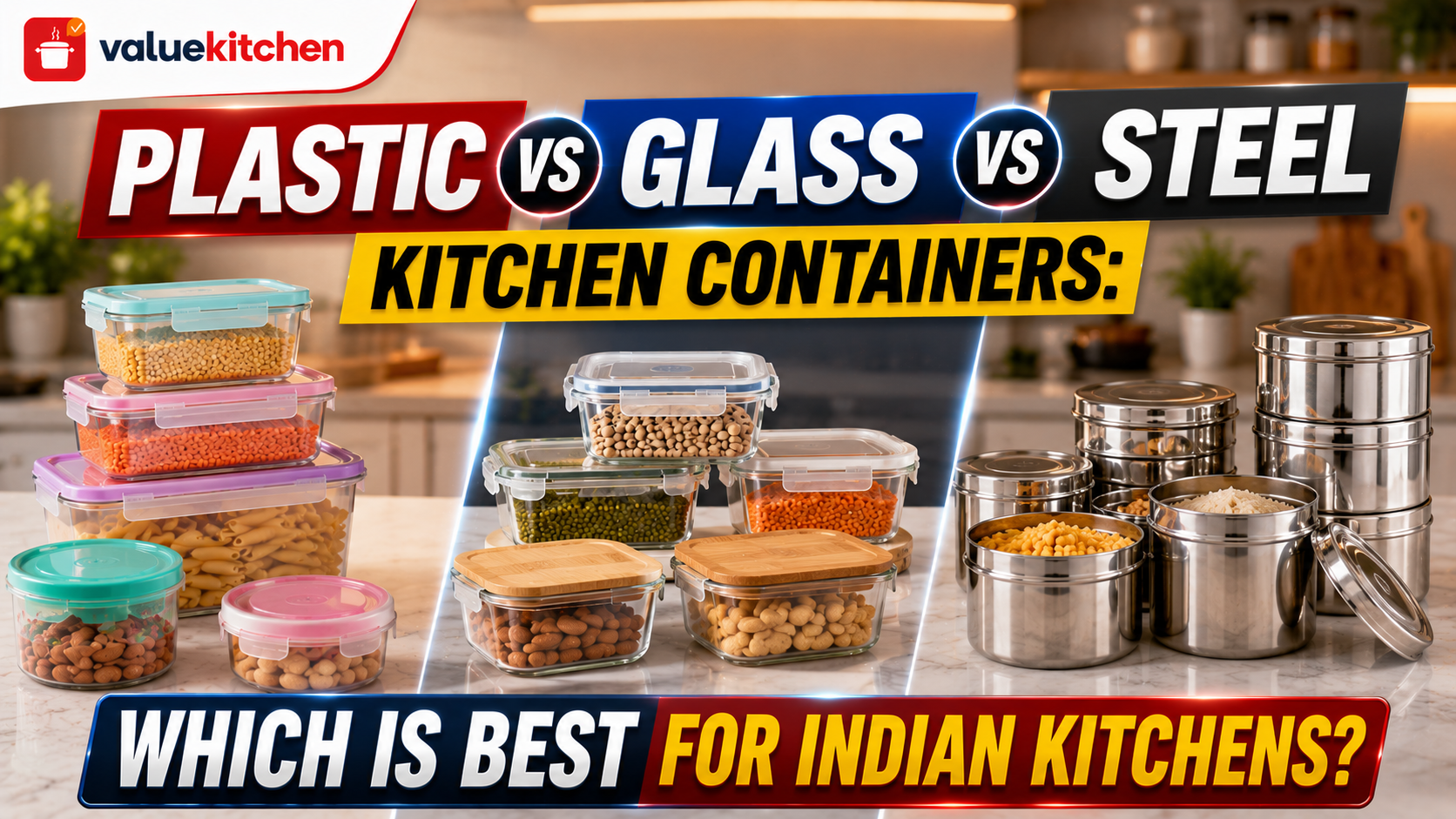
Plastic vs Glass vs Steel Kitchen Containers: Which Is Best for Indian Kitchens?
Some links on this page are affiliate links. We may earn a commission at no extra cost to you.
Walk into any Indian kitchen, and you will find all three: plastic boxes stacked in the fridge, steel dabbas on the counter, and glass jars on the masala shelf. Each material has a role it plays well and situations where it falls short. This comparison breaks it down so you can decide exactly which to buy for which job.
Quick Comparison: Plastic vs Glass vs Steel
| Feature | Plastic | Glass | Stainless Steel |
|---|---|---|---|
| Cost | Lowest | Medium | Medium to high |
| Weight | Very light | Heavy | Light to medium |
| Odor absorption | Absorbs over time | Zero absorption | Zero absorption |
| Stain resistance | Stains with turmeric | No staining | No staining |
| Breakability | Does not break | Can break if dropped | Does not break |
| Microwave safe | BPA-free only | Yes (borosilicate) | No |
| Fridge safe | Yes | Yes (if rated) | Yes |
| Longevity | 2-4 years | Decades if unbroken | Decades |
| Visibility | Clear (most) | Fully transparent | Not visible inside |
Plastic Containers: Best for Fridge and Everyday Use

Plastic containers are the workhorses of the Indian kitchen. They are light, unbreakable, and available in every size and shape. BPA-free plastic from brands like LocknLock is safe for food storage, fridge use, and even freezing. The four-sided locking lid on the LocknLock 2.6L container creates one of the best airtight seals available in plastic under Rs. 700.
Where plastic struggles in an Indian kitchen is with strong ingredients. Turmeric stains plastic permanently. Tamarind and chilli oils get absorbed into the plastic surface over time, making the container smell even after washing. For these reasons, plastic is best suited for neutral-smelling foods: cut vegetables, cooked rice, leftovers, and fridge-stored fruits.
- Lightest material, easy to handle daily
- Unbreakable and drop-safe
- Lowest cost, available in every size
- Safe for fridge and freezer storage
- Stains permanently with turmeric
- Absorbs odors from strong spices over time
- Shorter lifespan (2-4 years)
- Not safe for hot food or microwave unless labeled
Best plastic pick: LocknLock Airtight Fridge Container 2.6L at Rs. 695
For pantry use with dry ingredients, the OMDAR Cloud 4-piece set at Rs. 345 gives you more containers for less money, with strong airtight seals rated highly by 3,998 buyers.
OMDAR Cloud 4-pc Set , Check Price
Glass Containers: Best for Spices, Masala, and Display Storage

Glass containers are the best choice for strong-smelling and strongly coloured ingredients in Indian cooking. Turmeric, chilli powder, garam masala, and pickle do not stain glass and do not transfer their smell into the next batch of stored food. Glass is also fully transparent, so you can see at a glance how much of each masala or ingredient is left without opening the container.
The SILIVO set gives you 6 square glass jars with steel lids at Rs. 949, which is exceptional value for a complete pantry setup. The square shape makes much better use of shelf space than round jars. The CELLO Modustack Glassy jars are the more affordable entry point at Rs. 329 for 2 pieces, and they are specifically rated as freezer and fridge safe, which gives them an edge over most glass options in this price range.
The main limitation of glass is weight and breakability. A full glass jar is noticeably heavier than its plastic or steel equivalent, and dropping it means replacement. For homes with small children or high-traffic kitchens, this is a real practical concern.
- Zero odor and stain absorption
- Fully transparent for contents visibility
- Best for masalas, spices, and display storage
- Lasts decades if not broken
- Heaviest of the three materials
- Breaks when dropped, permanent replacement needed
- More expensive than plastic
Best glass pick: SILIVO Glass Jars 6-pc set at Rs. 949
Budget glass pick: CELLO Modustack Glassy 2-pc at Rs. 329
Stainless Steel Containers: Best for Daily Dal, Rice, and Long-Term Storage

Steel containers have been in Indian kitchens for generations, and the reason is simple: they last. Stainless steel does not stain, does not absorb odors, does not degrade over time, and does not leach any chemicals into food. For storing raw dal, rice, lentils, and flour daily, steel is the most practical and hygienic choice.
The SIARA SS 3-piece set with SUS316L surgical-grade steel at Rs. 499 is the best steel pick under Rs. 500. The airtight lids and stackable design make these suitable for both counter storage and fridge use. The only limitation is that you cannot see inside steel containers without opening them, which is a minor inconvenience compared to the material’s overall advantages for Indian cooking.
Steel is also the only material on this list that is unbreakable, odor-proof, stain-proof, and suitable for decades of daily use. For the core staples of the Indian pantry, nothing beats it.
- Lifetime durability, lasts decades of daily use
- Zero odor, stain, or chemical leaching
- Completely hygienic for Indian staples
- Unbreakable and drop-safe
- Cannot see contents without opening
- Not microwave-safe
Best steel pick: SIARA SS Containers 3-pc (1000ml) at Rs. 499
Which Should You Buy for Your Indian Kitchen?
Use plastic for: Fridge storage of cooked food, cut vegetables, and leftovers. Dry pantry items like oats, sugar, and flour where odor absorption is not an issue. Anywhere you need light, unbreakable containers in large quantities.
Use glass for: Masala shelf, whole spices, pickles, dry fruits, and any ingredient with a strong color or smell. Display storage on open shelves where you want a clean, attractive look.
Use steel for: Daily staples like dal, rice, chana, rajma, and other pulses. Ingredients that need long-term storage and frequent access. Any situation where you need maximum hygiene and durability over many years.
The practical answer for most Indian kitchens: Use all three. Steel for staples on the counter, glass for masalas and display, plastic for the fridge. Trying to use only one material across all storage needs leads to compromises in at least one area.
Frequently Asked Questions
Is plastic safe for storing food in Indian kitchens?
BPA-free plastic from certified brands is safe for food storage. Avoid using cheap unbranded plastic containers, containers without a BPA-free label, or any plastic container for storing hot food. For acidic ingredients like tamarind paste or lemon juice stored for extended periods, glass or steel is a safer choice.
Which container material is best for storing masala in India?
Glass is the best material for masala storage. It does not absorb the color or aroma of spices, allows you to see the contents clearly, and is easy to clean thoroughly. Steel is a close second for functionality, but you cannot see the contents without opening the container.
Can I use plastic containers in the microwave?
Only if the container is explicitly labeled as microwave-safe. BPA-free does not automatically mean microwave-safe. Glass (non-metallic) is the safest option for reheating food in a microwave. Never use steel containers in a microwave.
How long do plastic containers last in Indian kitchens?
Good quality BPA-free plastic containers from brands like LocknLock last 3-5 years under regular daily use. Cheaper unbranded plastic degrades faster, especially when exposed to oil, heat, and strong spices. Replacing plastic containers every few years is normal and expected.
Are glass containers heavy for daily kitchen use in India?
Yes, glass is heavier than plastic or steel. A full 1L glass jar weighs noticeably more than a steel or plastic equivalent. For shelves and display storage where you handle the container once a day, this is manageable. For items you open and close multiple times a day, lighter steel containers are more practical.