
What Cannot Go in a Dishwasher: Complete Guide for Indian Kitchens
A dishwasher is one of the most useful kitchen appliances you can own. But put the wrong item in it and you can warp, crack, strip, or permanently damage things that would have lasted decades with hand washing.
This guide tells you exactly what cannot go in a dishwasher, why each item is at risk, and what to do instead. This is especially useful for Indian kitchens where cookware includes cast iron tawas, copper vessels, and traditional non-stick pans that need specific care.
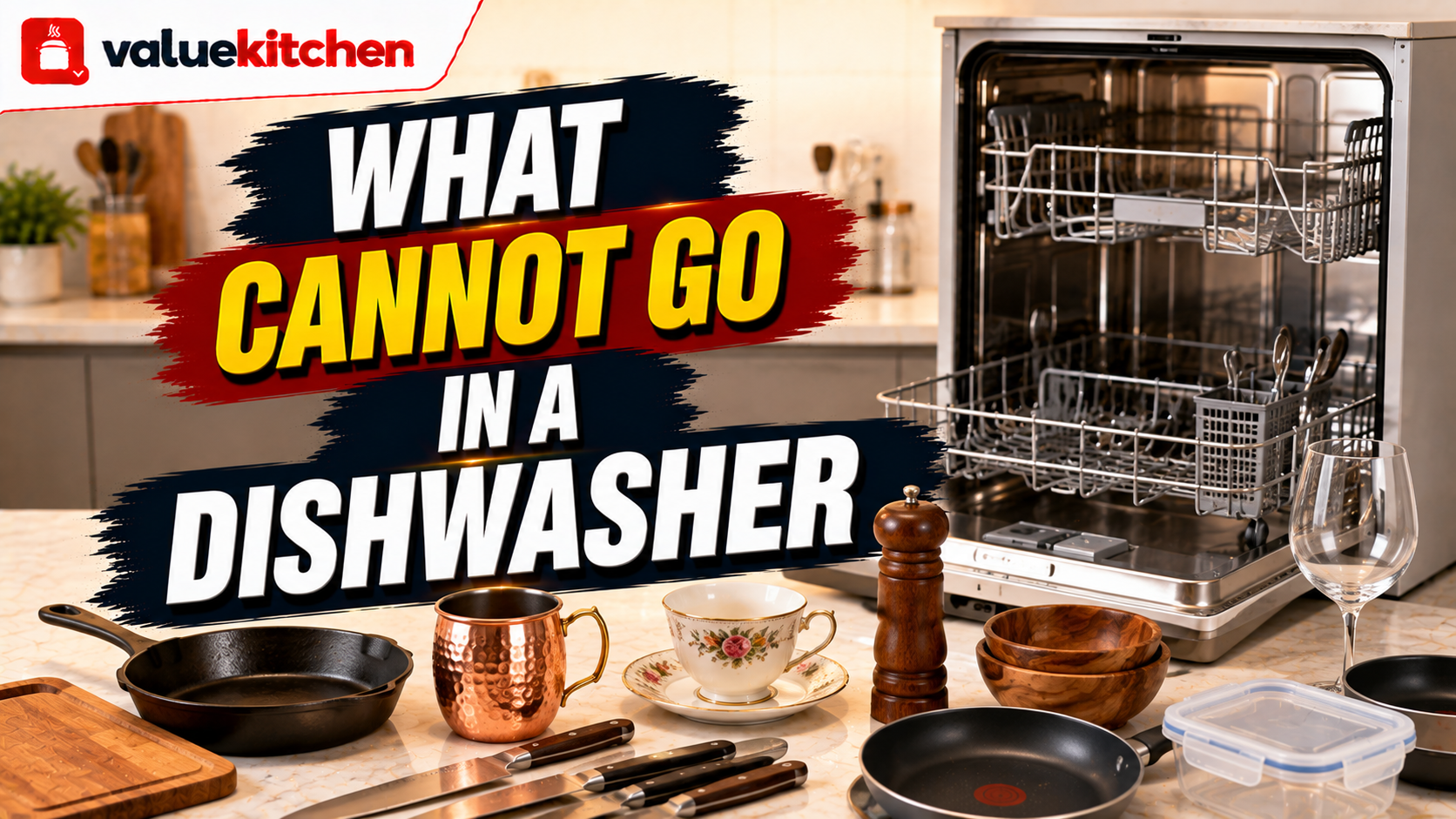
Cast Iron (Tawa, Kadai)
Cast iron is the most common dishwasher casualty in Indian kitchens. The high heat, harsh detergent, and prolonged exposure to water during a dishwasher cycle strip the seasoning layer from the surface entirely. Within a single wash, a well-seasoned cast iron tawa loses all the non-stick properties built up over years of cooking.
After that, the exposed iron surface rusts quickly. A rusted cast iron piece requires re-seasoning, which takes multiple oil-coating and baking cycles to restore. In severe cases, deep rust can pit the surface permanently.
What to do instead: Clean cast iron by scrubbing with hot water and a stiff brush while still warm. Dry immediately and completely, then rub a very thin layer of oil on the surface before storing. Never soak in water.
Copper Vessels
Copper reacts with the alkaline dishwasher detergent and the high heat of the wash cycle. This causes oxidation that turns the bright copper surface dull, discoloured, and spotted. Decorative copper items lose their lustre permanently. Copper cooking vessels and water bottles can develop a greenish tarnish (patina) that is difficult to remove.
Brass items (common in Indian pooja thalis and serving vessels) have the same problem. Both copper and brass need gentle hand washing.
What to do instead: Hand wash copper and brass with mild soap and warm water. For tarnish removal, a paste of lemon juice and salt applied for 5 minutes, then rinsed off, works well as a natural polish.
Non-Stick Pans and Cookware
Non-stick coatings (PTFE, ceramic, and similar) degrade with repeated dishwasher cycles even when the manufacturer says it is safe. The combination of harsh detergent, high water temperature, and the mechanical agitation of the water jets erodes the coating over time. After 20 to 30 dishwasher cycles, most non-stick surfaces become noticeably less effective.
For Indian kitchens where non-stick tawas and kadais are used daily for rotis and gravies, hand washing extends the life of the coating by years.
What to do instead: Hand wash with a soft sponge and mild dish soap in warm water. Never use steel wool or abrasive scrubbers. The non-stick surface is the most valuable part of the pan. Protect it.
Wooden Items (Spoons, Cutting Boards, Handles)
Wood absorbs water. In a dishwasher, wooden spoons, spatulas, and cutting boards get soaked through, then subjected to high heat in the drying cycle. This causes the wood to swell, crack, and warp. After a few washes, wooden handles split and wooden cutting boards develop deep cracks that harbour bacteria and are impossible to clean properly.
Knives and other tools with wooden handles also fall into this category. The handle cracks and the blade-handle junction weakens, making the tool unsafe over time.
What to do instead: Hand wash wooden items with warm soapy water, rinse quickly, and dry immediately. Do not leave wooden items soaking in water. Apply food-grade mineral oil to cutting boards every few months to maintain the wood.
Aluminium Vessels and Pressure Cookers
Aluminium reacts with the alkaline dishwasher detergent and causes oxidation. This turns shiny aluminium dull and grey, and can cause dark spots or a chalky residue on the surface. Anodised aluminium (hard-coated aluminium used in some premium cookware) is more resistant but still degrades faster in a dishwasher than with hand washing.
Traditional aluminium pressure cookers, which are extremely common in Indian kitchens, should always be hand washed. The gasket and pressure regulator also need to be washed and dried by hand separately.
What to do instead: Hand wash with warm soapy water and a soft sponge. For discolouration on aluminium, boil water with two tablespoons of cream of tartar inside the vessel for 10 minutes. This helps restore the original colour.
Sharp Knives
Dishwasher cycles dull knife edges faster than almost any other treatment. The knocking of metal against the rack and other utensils during the wash, combined with the alkaline detergent, degrades the blade edge quickly. After regular dishwasher use, a sharp kitchen knife can require sharpening every few weeks instead of every few months.
Additionally, wooden-handled knives split and metal-handled knives with welded joints can weaken at the joint over time.
What to do instead: Hand wash knives with warm soapy water immediately after use, dry with a soft cloth, and store in a knife block or on a magnetic strip. This keeps the edge sharper for significantly longer.
Delicate Glassware and Crystal
Standard tempered glass and regular ceramic dishes are generally dishwasher safe. But thin wine glasses and crystal can cloud, crack, or chip from the mechanical stress and temperature cycles. Hand-painted ceramics and glazed pottery lose their decorative finishes over repeated dishwasher cycles as the glaze slowly erodes.
Antique or heirloom serving pieces should always be hand washed regardless of material.
Other Items to Keep Out
- Insulated bottles and tumblers: The vacuum seal between the double walls breaks down in dishwashers, destroying the insulating function permanently.
- Items with paper labels or stickers: Labels dissolve in dishwashers and can clog the filter.
- Copper-bottomed stainless steel pans: The copper layer on the bottom tarnishes in a dishwasher even if the stainless steel body is safe.
- Graters and fine mesh sieves: Fine holes trap food particles in dishwashers and can develop rust if made of lower-grade metal.
- Anything with a label that says “hand wash only”: Always follow the manufacturer’s guidance on this.
Quick Reference: Dishwasher Safe vs Not Safe
| Item | Dishwasher Safe? | Reason |
|---|---|---|
| Cast iron tawa or kadai | No | Strips seasoning, causes rust |
| Copper vessels | No | Oxidises and discolours permanently |
| Non-stick pans | Avoid | Coating degrades over time even if labelled safe |
| Wooden spoons and boards | No | Absorbs water, warps, and cracks |
| Aluminium pressure cooker | No | Oxidises and turns dull grey |
| Sharp kitchen knives | No | Dulls the blade edge quickly |
| Insulated bottles and flasks | No | Breaks the vacuum seal, ruins insulation |
| Stainless steel plates and bowls | Yes | Generally dishwasher safe |
| Regular ceramic mugs and plates | Yes | Safe for most standard ceramic |
| Tempered glass containers | Yes | Dishwasher safe if labelled so |
| Plastic containers (BPA-free, dishwasher-safe) | Top rack only | Bottom rack heat causes warping |
Frequently Asked Questions
Can I put my pressure cooker gasket in the dishwasher?
It depends on the material. Silicone gaskets are generally dishwasher safe. Rubber gaskets can degrade and lose their seal properties with repeated dishwasher exposure. Check your pressure cooker manual to confirm. When in doubt, hand wash the gasket and let it air dry completely before storing.
Can stainless steel items go in the dishwasher?
Most stainless steel cookware, plates, bowls, and utensils are dishwasher safe. The exception is stainless steel with wooden handles, copper-bottomed stainless pans, and stainless steel knives where the blade edge matters. High-grade stainless steel (18/8 or 18/10) handles dishwasher cycles well without staining or corroding.
Why do plastic containers warp in the dishwasher?
The heating element in most dishwashers is located at the bottom of the tub. Plastic containers placed on the bottom rack are exposed to direct radiant heat during the drying cycle, which warps them. Always place plastic containers and lids on the top rack only, where heat exposure is lower and the risk of warping is minimal.
Can I put my air fryer basket in the dishwasher?
Many air fryer baskets are labelled dishwasher safe. If yours is, place it on the top rack only and avoid the heated dry setting. Even when marked safe, repeated dishwasher cycles degrade the non-stick coating faster than hand washing. Hand washing the basket after every use and reserving the dishwasher for an occasional deep clean extends the coating’s life significantly.
Can I wash my Milton or Cello insulated bottle in the dishwasher?
No. Milton, Cello, and similar insulated double-wall bottles use a vacuum between the inner and outer wall to maintain temperature. Dishwasher heat and pressure can compromise this vacuum seal, permanently destroying the insulation. The bottle will feel warm to the touch after filling with hot water, meaning the vacuum is gone. Always hand wash insulated bottles with warm soapy water.
Is it safe to wash copper water bottles in the dishwasher?
No. Copper water bottles oxidise and discolour in the dishwasher due to alkaline detergent. The surface turns dark and develops spots that are difficult to remove. Hand wash with warm water and a mild soap. For regular maintenance, use a mixture of lemon juice and salt to polish the inside and outside, then rinse thoroughly.
This guide covers general dishwasher safety guidelines for common Indian kitchen items. Always refer to your specific cookware or appliance manual for manufacturer-specific guidance. ValueKitchen is an independent kitchen resource for Indian households.




One Comment
Comments are closed.