Panasonic NN-CT353BFDG vs Samsung CE73JD-B1: Which Convection Microwave Should You Buy?
Some links on this page are affiliate links. We may earn a commission at no extra cost to you.
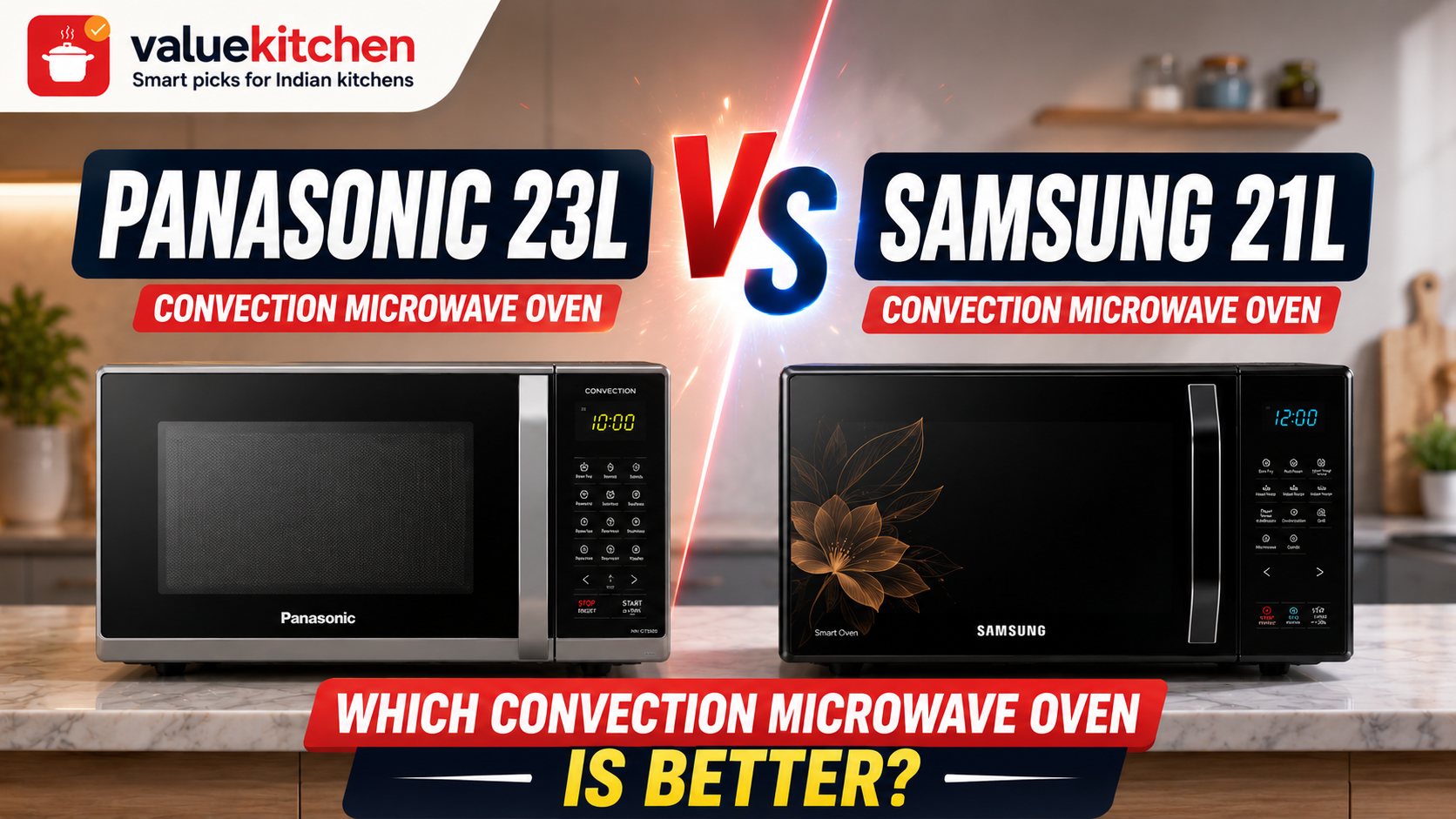
The Panasonic NN-CT353BFDG and Samsung CE73JD-B1 are the two most closely matched convection microwave ovens in India under Rs. 12,000. They are priced just Rs. 107 apart, come from equally trusted brands, and serve the same audience: home cooks who want to bake, grill, and reheat from a single appliance.
The differences are real, though. Panasonic brings its 360 Heat Wrap technology for even baking, while Samsung brings multiple cooking modes and a pre-heat function. This comparison covers every dimension that matters, so you can make a confident choice.
At a Glance
| Feature | Panasonic NN-CT353BFDG | Samsung CE73JD-B1 |
|---|---|---|
| Type | Convection | Convection |
| Capacity | 23L | 21L |
| Key Heating Tech | 360 Heat Wrap | Standard convection fan |
| Cooking Modes | Microwave, Grill, Convection, Combination | Microwave, Grill, Convection, Combination, Keep Warm |
| Pre-Heat Function | Yes | Yes |
| Keep Warm | No | Yes |
| Finish | Black Mirror | Black |
| Child Lock | Yes | Yes |
| Product Warranty | 1 year | 1 year |
| Price (approx.) | Rs. 11,750 | Rs. 11,857 |
The Products
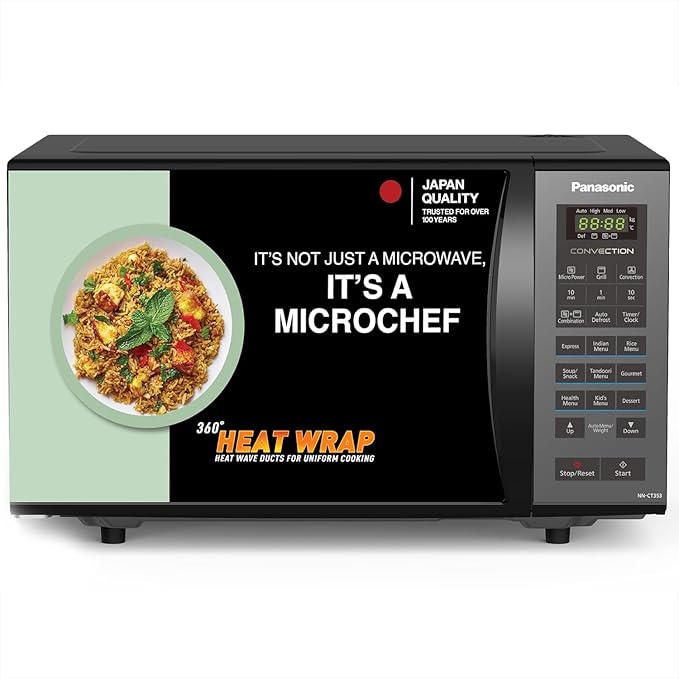
Panasonic 23L Convection Microwave Oven (NN-CT353BFDG, Black Mirror)
- 360 Heat Wrap for more even baking results
- Larger 23L capacity fits bigger cookware
- Premium Black Mirror finish looks modern
- Rs. 107 cheaper than Samsung
- No Keep Warm mode
- Standard 1-year product warranty

Samsung 21L Convection Microwave Oven (CE73JD-B1/XTL, Black)
- Keep Warm mode for Indian meal prep (unique feature)
- 5 cooking modes including combination and keep warm
- Strong Samsung service in tier-2/3 cities
- Smaller 21L capacity vs Panasonic’s 23L
- Standard convection fan, less even than 360 Heat Wrap
- Rs. 107 more expensive than Panasonic
Capacity: Panasonic Wins
Panasonic gives you 23L versus Samsung’s 21L. That 2L difference matters when you are baking a standard 9-inch round cake, fitting a full-sized casserole dish, or loading up a baking tray. Samsung’s 21L is workable for a couple or small family, but Panasonic’s 23L handles a wider range of cookware without you having to think about whether something fits.
Baking Performance: Panasonic Wins
This is where the gap between these two models is most meaningful. Panasonic’s 360 Heat Wrap technology distributes heat from multiple directions inside the cavity simultaneously, rather than relying solely on a single top heating element and a fan. The result is more even baking with consistent browning across the top, sides, and bottom of your baked goods. Buyers who bake cakes, cookies, or bread regularly report noticeably more even results with the Panasonic compared to standard convection designs. Samsung uses a more conventional hot air fan system, which is competent but does not match Panasonic’s multi-directional approach for precision baking.
Cooking Modes: Samsung Wins
Samsung has a slight edge in cooking versatility. Both models support microwave, grill, convection, and combination cooking. Samsung adds a dedicated Keep Warm mode, which holds cooked food at serving temperature without continuing to cook it. This is a genuinely useful feature for Indian households where dishes are prepared ahead of meal time. Panasonic does not include Keep Warm as a standalone mode.
Pre-Heat: Tie
Both models support a pre-heat function, which heats the oven cavity to a set temperature before you load the dish. Pre-heating is important for baking because a consistent starting temperature affects rise and texture. Neither brand has a clear advantage here.
Design: Panasonic Wins
The Panasonic NN-CT353BFDG comes in a Black Mirror finish that looks distinctly premium on a kitchen counter. The reflective surface gives it a cleaner, more modern appearance compared to Samsung’s standard matte black finish. Design is subjective, but if aesthetics matter in your kitchen setup, Panasonic pulls ahead.
After-Sales Service: Tie
Both LG and Samsung have well-established authorised service networks across India. Panasonic’s service coverage is strong in metros and major cities. In smaller towns, Samsung’s network tends to be slightly more extensive. For most buyers in urban areas, both brands are equally accessible for servicing.
Price: Panasonic Wins (Marginally)
At Rs. 11,750, the Panasonic is Rs. 107 cheaper than Samsung’s Rs. 11,857. The price gap is too small to influence a decision on its own. Both are effectively the same price, and the decision should be based on features, not this marginal difference.
Verdict: Which One Should You Buy?
Buy the Panasonic NN-CT353BFDG if: baking is your primary use case and you want the most even, consistent results from 360 Heat Wrap technology. Also, choose Panasonic if you want the larger 23L capacity or prefer the premium Black Mirror design.
Buy the Samsung CE73JD-B1 if: you value cooking versatility over baking precision, specifically want the Keep Warm mode for Indian meal prep, and are comfortable with a slightly smaller 21L cavity. Samsung’s strong service network in tier-2 and tier-3 cities is also a consideration if you are outside a major metro.
For bakers, the Panasonic is the clear winner. For general-purpose convection cooking with keep warm functionality, the Samsung earns its slightly higher price.
Quick Decision: Compare and Buy
Frequently Asked Questions
Which is better for baking: Panasonic NN-CT353BFDG or Samsung CE73JD-B1?
The Panasonic NN-CT353BFDG is the better choice for baking. Its 360 Heat Wrap technology distributes heat from multiple directions, producing more even results than Samsung’s standard convection fan system. If baking cakes, cookies, and bread at home is your primary reason for buying a convection microwave, the Panasonic is the more suitable pick.
Does the Samsung CE73JD-B1 support baking?
Yes. The Samsung CE73JD-B1 is a convection microwave and supports baking in convection mode. It bakes competently for everyday home use. However, its standard single-fan convection system is not as even as Panasonic’s 360 Heat Wrap for precision baking tasks.
Is 23L enough for baking a standard cake?
Yes. A 23L convection microwave comfortably fits a standard 8-inch or 9-inch round cake tin. Panasonic’s 23L is the more practical size for regular baking. Samsung’s 21L fits most standard round tins, but may limit you with larger trays or square baking pans.
What is 360 Heat Wrap technology in Panasonic microwaves?
360 Heat Wrap is Panasonic’s proprietary convection heating system that wraps heat around food from multiple directions inside the cavity rather than from a single heating element and fan. This produces more consistent temperatures throughout the cavity, which translates to more even browning and better baking results compared to conventional single-element convection designs.
Which brand gives better after-sales service for microwaves in India?
Both Panasonic and Samsung have authorised service networks across India. Samsung tends to have a slightly wider presence in smaller cities and towns. Panasonic’s service is strong in metros and major urban centres. For buyers in large cities, both brands are equally accessible. For tier-2 and tier-3 cities, Samsung has a small edge in service availability.
Can I use these microwave ovens as a replacement for an OTG?
For everyday home baking, yes. Both models handle cakes, cookies, muffins, and bread for home use quantities. An OTG offers more precise temperature control and supports larger baking trays, making it better for serious or large-batch baking. For a household that bakes occasionally to regularly, a convection microwave is more practical because it also handles reheating, defrosting, and everyday cooking that an OTG cannot.